
BOTANIC GARDEN PROFILE Rimba Ilmu (the ‘Forest of Knowledge’) at 50
DOI:
https://doi.org/10.24823/Sibbaldia.2025.2100Keywords:
Garden history, Anniversary, Tropical, Urban, University, Herbarium, RubberAbstract
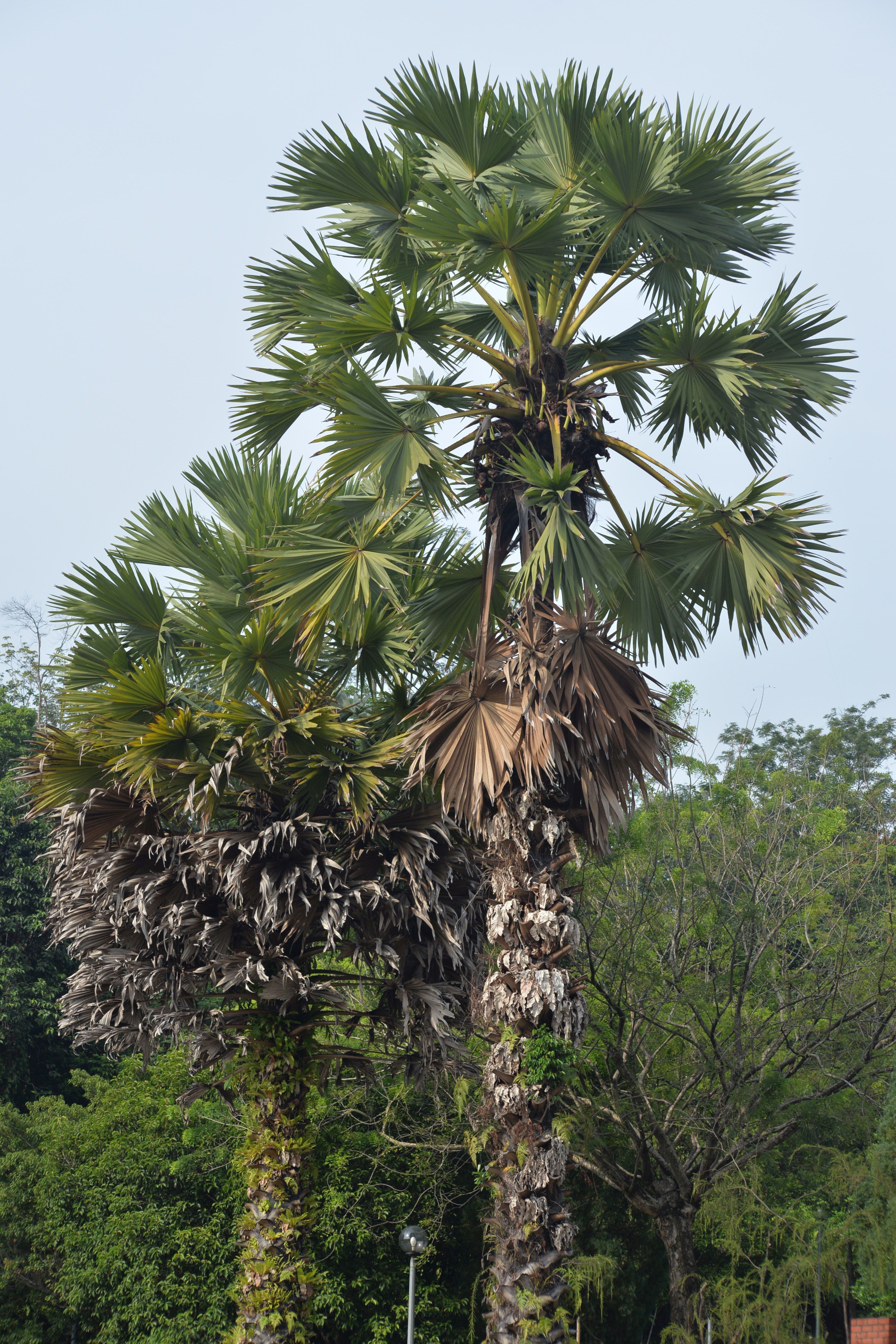
Established in 1974 within the Universiti Malaya campus, the Rimba Ilmu Botanic Garden is Malaysia’s first university botanic garden. Occupying nearly 60 ha in the Klang Valley, Malaysia’s most populated metropolis, Rimba Ilmu has evolved from an abandoned rubber plantation into a garden of 1,300 planted species, with many more spontaneously established. Unusually for a botanic garden, it eschews a formal flower garden aesthetic in favour of a tropical forest one: natural processes shape the Garden and its inhabitants alongside human-directed curation. As one of the last large green lungs in the Klang Valley, Rimba Ilmu provides essential ecosystem services to the city. The site houses the oldest and largest university herbarium in Malaysia, Universiti Malaya Herbarium (KLU), where 81,000 specimens are stored. Since the late 1990s, Rimba Ilmu has played a role in public environmental education, supported by facilities such as its Rare Plants & Orchid Conservatory and Rain Forests & Our Environment permanent exhibition. Rimba Ilmu has a community-oriented ethos. It has long supported the participation and development of volunteers, and continues to welcome collaborations with diverse partners. Holding on to a mission of research, conservation and education, Rimba Ilmu is part of the United Nations University’s Regional Centre of Expertise on Education for Sustainable Development Central Semenanjung. In 2024, Rimba Ilmu celebrated its 50th anniversary with a series of public events and a specially commissioned exhibition, Belukar dah jadi Rimba.
References
FREDIANI, K. (2023). The University of Dundee Botanic Garden and its precursors: a 50th anniversary survey. The Caledonian Gardener, 2023(1): 90–98.
JACOBS, J. (2024). Belukar Dah Jadi Rimba – 50 Years of Rimba Ilmu. Earth Matters [Podcast]. Available online: www.bfm.my/content/podcast/belukar-dah-jadi-rimba-50-years-of-rimba-ilmu (accessed January 2025).
JONES, D.T. (1985). Rimba Ilmu annual report. Unpublished internal report.
KAMPUNG CITY (2022). ImagiNasi. Available online: https://kampungcity.dimanajua.com/imaginasi (accessed January 2025).
MALAYSIAN NATURE SOCIETY (2023). Rantaian Urban Green Spaces. Available online: www.rugs.my (accessed February 2025).
MARSH CHRISTIAN TRUST (2025). Marsh Award for Education in Botanic Gardens. Available online: www.marshcharitabletrust.org/award/marsh-award-for-education-in-botanic-gardens (accessed January 2025).
MOHAMED, H. (2000). The herbarium and botanic garden of University of Malaya. In: MATSUURA, K. (ED.), Proceedings of the First and Second Symposia on Collection Building and Natural History Studies in Asia. National Science Museum Monographs, 18, Tokyo, pp. 69–75.
NEJIM AL-ASEDI, H., ABRAHAM STEIN, N. & ONG, B. (2024). Belukar dah jadi Rimba. Available online: https://online.fliphtml5.com/mxlcyb/fplc/#p=1 (accessed January 2025).
ONG, B. (2017). The Backyard Before You. The Rimba Project, Kuala Lumpur.
ONG, B. (2019). The Rimba Project: translational research through student volunteer engagement. Roots: Botanic Gardens Conservation International Education Review, 16(1): 15–18.
ONG, B. & ADIKAN, F.R.M. (2018). Challenging land use paradigms in a university context. In: TAN, D. (ED.), SCHEMA Case Studies. United Nations University International Institute for Global Health, Kuala Lumpur, pp. 17–20.
ONG, B., GOH, T.G., TAN, K.R., NASARUDDIN, A. & MOHAMAD, Z.F. (2019). Citizen science prospects and pitfalls: a developing world reflection. Roots: Botanic Gardens Conservation International Education Review, 16(2): 11–14.
ONG, B. & ONG, G.X. (2022). Let Nature Do Her Thing: Reimagining Ecosystem Restoration in Cities. United Nations Development Programme, New York. Available online: www.undp.org/publications/dfs-let-nature-do-her-thing-reimagining-ecosystem-restoration-cities (accessed January 2025).
PURTON, M. (2024). World Environment Day: An A-Z of the world’s 17 megadiverse countries. World Economic Forum Stories, 4 June. Available online: www.weforum.org/stories/2024/06/environment-day-biodiversity-world-megadiverse-countries (accessed January 2025).
REISZ, E. (2003). City as garden: shared space in the urban botanic gardens of Singapore and Malaysia, 1786–2000. In: BISHOP, R., PHILLIPS, J. & YEO, W.W. (EDS), Postcolonial Urbanism: Southeast Asian Cities and Global Processes. Routledge, New York, pp. 123–148.
RIMBA ILMU BOTANIC GARDEN (N.D. a). Rimba Ilmu Environmental Education Programme [Brochure].
RIMBA ILMU BOTANIC GARDEN (N.D. b). Visit Rimba Ilmu botanic garden! [Brochure].
STANTON, W.R. (1974a). Untitled memo dated 28 March 1974. Unpublished.
STANTON, W.R. (1974b). Closing address: synthesis, progress, policy, and regional collaboration. In: The Role and Goals of Tropical Botanic Gardens. Proceedings of a symposium held at the Rimba Ilmu Botanic Garden of the University of Malaya, Kuala Lumpur, Malaysia, in conjunction with the ceremonial opening of the Rimba Ilmu by the Chancellor of the University, D.Y.M.M. Raja Permaisuri Agong, August 1974. Universiti Malaya Press, Kuala Lumpur, pp. 227–237.
STEENIS-KRUSEMAN, M.J.V. (1974). Malaysian plant collectors and collections. Supplement II. Flora Malesiana, 8(1): 1–115. Available online: www.biodiversitylibrary.org/part/238900 (accessed January 2025).
STONE, B.C. (1974). Research themes for the University of Malaya botanic garden. In: The Role and Goals of Tropical Botanic Gardens. Proceedings of a symposium held at the Rimba Ilmu Botanic Garden of the University of Malaya, Kuala Lumpur, Malaysia, in conjunction with the ceremonial opening of the Rimba Ilmu by the Chancellor of the University, D.Y.M.M. Raja Permaisuri Agong, August 1974. Universiti Malaya Press, Kuala Lumpur, pp. 63–67.
SUGUMARAN, M. (2005). Article 13 – public education and awareness. Roots: Botanic Gardens Conservation International Education Review, 2(1): 16–17.
SUGUMARAN, M. & LOW, Y.W. (2009). The Rare Plants and Orchid Conservatory at the Rimba Ilmu Botanical Garden, Malaysia’s first university botanical garden. Malesian Orchid Journal, 3: 71–88.
SUGUMARAN, M., TAN, D. & ONG, B. (2018). Holding onto a mission for conservation and education. In: TAN, D. (ED.), SCHEMA Case Studies. United Nations University International Institute for Global Health, Kuala Lumpur, pp. 13–16.
THE RIMBA PROJECT (2016). Bats in the City [Online video]. Available online: www.youtube.com/watch?v=3pB5xOTJBfg (accessed January 2025).
THE RIMBA PROJECT (2020). Buluh in the City. Available online: https://ubi-my.com/wp-content/uploads/2020/06/buluh-in-the-city_official-publication.pdf (accessed January 2025).
UM+ (2021). The Rimba Project Story. Available online: www.umresearchplus.com/the-rimba-project-story (accessed January 2025).
UNIVERSITI MALAYA (1970). Proposals for a major botanic garden facility at the University of Malaya, Pantai Valley: Introduction. Internal report, 2nd printing 1972. Unpublished.
UNIVERSITI MALAYA (1974). Pembukaan Rasmi Rimba Ilmu [Programme book].
URBAN BIODIVERSITY INITIATIVE (2025). Learn: Backyard Explorers. Available online: https://ubi-my.com/backyard-explorers (accessed January 2025).
WONG, K.M. (2001). Rimba Ilmu Guidebook No. 3: Medicinal Plants, Rain Forests and Us. Institute of Biological Sciences, University of Malaya, Kuala Lumpur.
WONG, K.M. & MOHAMAD, M. (1997). Rimba Ilmu Guidebook No. 1: Rimba Ilmu—The University of Malaya’s Garden of a Thousand Species—An Introduction to Malaysia’s First University Botanic Garden. Institute of Biological Sciences, University of Malaya, Kuala Lumpur.
WONG, K.M. & SANTIAGO, L.A. (1997). Rimba Ilmu Guidebook No. 2: The Rimba Ilmu’s Citrus and Citroid Collection. Institute of Biological Sciences, University of Malaya, Kuala Lumpur.
WONG, K.M., SUGUMARAN, M., CHEAH, Y.H. & SUKSUWAN, S. (2021). Species, forests, cities: protecting and improving tree stands and the fate of species in urbanised and changing environments. In: CRANBROOK, G. (ED.), Malayan Nature Journal, 81st Anniversary Special Issue on Conservation: 93–114.
WORLD BANK (2021). Climate Change Knowledge Portal: Malaysia. Available online: https://climateknowledgeportal.worldbank.org/country/malaysia/climate-data-historical (accessed February 2025).
WORLD BANK (2025). Urban population (% of total population). Available online: https://data.worldbank.org/indicator/SP.URB.TOTL.IN.ZS (accessed January 2025).
YAP, J. (2024). Rimba Ilmu marks 50 fruitful years. The Star, 12 September. Available online: www.thestar.com.my/metro/metro-news/2024/09/12/rimba-ilmu-marks-50-fruitful-years (accessed January 2025).
YONG, H.S. (2023). The Natural World Universiti Malaya. Universiti Malaya Press, Kuala Lumpur.
Downloads
Published
Issue
Section
Categories
License
Copyright (c) 2025 Benjamin Ong, Yong Kien Thai, Sugumaran Manickam, Siti Syuhada Sapno, Ilyana Hassya, Nurul Fitrah Marican

This work is licensed under a Creative Commons Attribution 4.0 International License.
Please read our Open Access, Copyright and Permissions policies for more information.