
Botanic Garden Profile Brindaban Botanic Garden, Hetauda, Bagmati Province, Nepal
DOI:
https://doi.org/10.24823/Sibbaldia.2026.3669Abstract
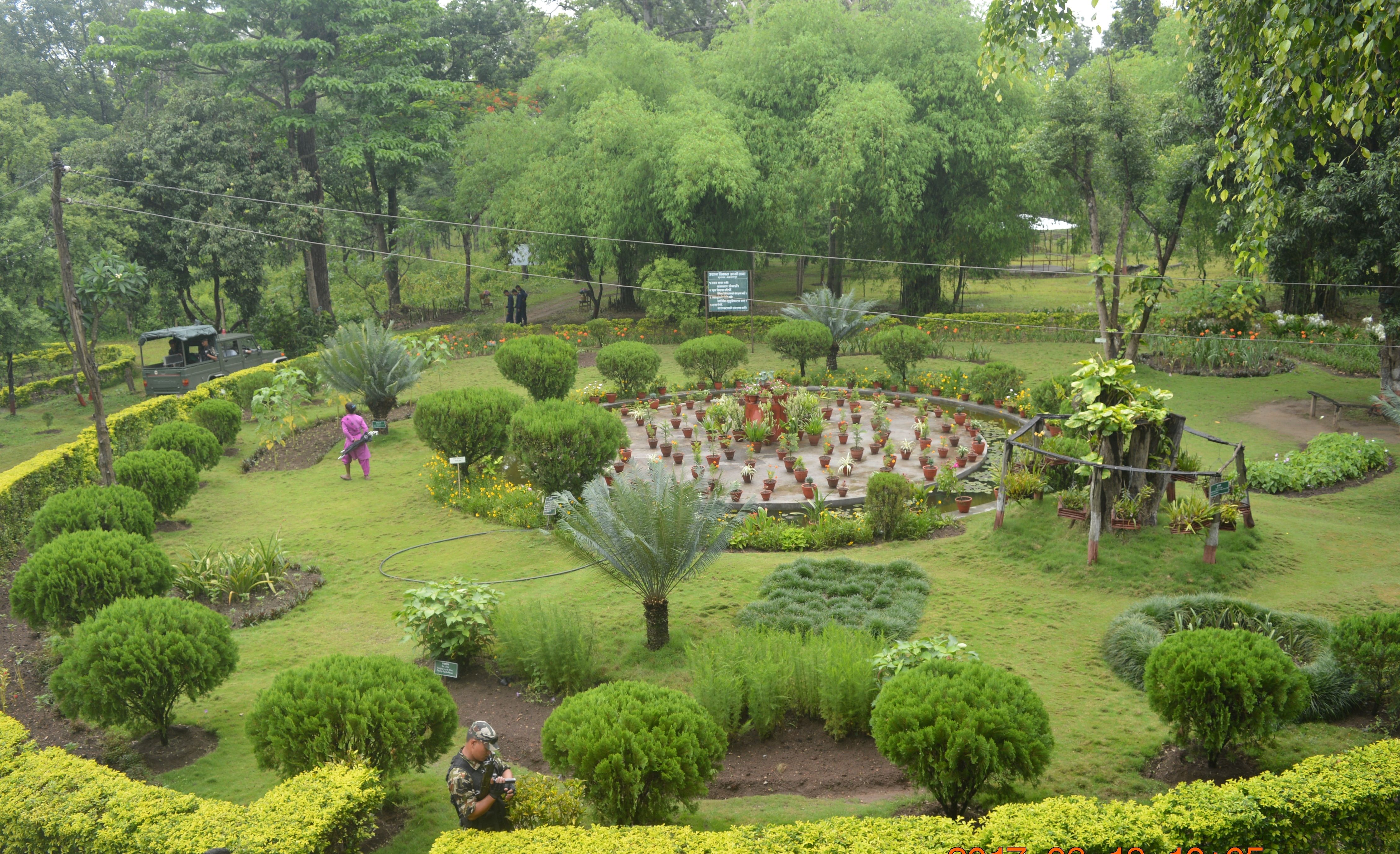
Brindaban Botanic Garden (BBG) was established in 2019 BS (1962 CE) as a medicinal herbal farm under the Department of Plant Resources. The Garden is managed by the Government of Nepal and is located at an altitude of 400 m in the tropical zone of the Churiya range of Central Nepal, Hetauda-13. It was reduced to 30 ha from 96 ha in 2050 BS (1993 CE), and has evolved substantially since its inception as a location for the mass cultivation of economically important aromatic plants. It is now a diverse botanic garden, engaging in ecotourism, research, education and plant conservation. BBG has living collections of 508 plant species that support its activities. It has ten themed sections, an information display centre and a phytochemistry laboratory, and it runs active conservation programmes for three threatened species. In recent years, BBG has strengthened its role in plant research by carrying out varietal development of Mentha arvensis and fern propagation. The Garden’s growing popularity and projected growth in visitor numbers from several districts of Nepal satisfy its objectives of providing a green space in an increasingly urbanised society and delivering science-based information about plants. This article provides a brief history of the Garden, an overview of its operations and a description of the layout of its different sections.
References
BALOCH, E. (2011). Gnetum montanum. The IUCN Red List of Threatened Species 2011. https://dx.doi.org/10.2305/IUCN.UK.2011-1.RLTS. T194926A8920227.en
BUDHATHOKI, P., GNAWALI, P., BARAL, D. & GYAWALI, A. (2020). Pesticidal potential of ethnobotanically important plants in Nepal – a review. Acta Scientifica Malaysia (ASM), 4(2): 69–74. http://doi.org/10.26480/asm.02.2020.69.74
FRASER-JENKINS, C.R. & KANDEL, D.R. (2019). Ferns and Fern-allies of Nepal. Vol. 2. Department of Plant Resources, Ministry of Forests and Soil Conservation, Kathmandu.
HUGHES, K. & LAMICHHANE, D. (2017). The National Botanic Garden of Nepal. Sibbaldia, 15: 9–30. https://doi.org/10.24823/Sibbaldia.2017.220
HUGHES, K., POUDEL, R.C., LAMICHHANE, D. & WATSON, M.F. (2023). Conservation collections at the National Botanic Garden of Nepal – The Franklinia Taxus Project. Sibbaldia, 22: 1–15. https://doi.org/10.24823/Sibbaldia.2022.1956
LAMICHHANE, D. & RAI, S.K. (2021). Role of botanical gardens of Nepal in biodiversity conservation, education and research. In: SIWAKOTI, M., MANDAL, T.N., RAI, S.K., GAUTAM, T.P., ARYAL, H.P. & LIMBU, K.P. (EDS), Integrating Biological Resources for Prosperity. Botanical Society of Nepal, Nepal Biological Society and Department of Plant Resources, Kathmandu, pp.73–84.
MANANDHAR, N.P. (2002). Plants and People of Nepal. Timber Press, Portland, OR.
PARAJULI, R.R., THAKUR C.K. & BUDHATHOKI, P. (2021). Medicinal and Aromatic Plant Specimens Conserved in Brindaban Botanical Garden, Plant Research Centre, Makawanpur District, Nepal. Government of Nepal/Ministry of Forests and Environment, Kathmandu.
TAMANG, R. & CHAPAGAIN, N.H. (2016). Documentation of plant diversity conserved in botanical gardens of Makwanpur, Nepal. Plant Resources, 38: 30–41.
THAKUR, C., PARAJULI, R.R., BUDHATHOKI, P. & RAJBHANDARY, S. (2022). Propagation of Tectaria coadunata (Wall. ex Hook. & Grev.) C.Chr. by spores. Journal of Plant Resources, 20(1): 121–128. https://doi.org/10.3126/bdpr.v20i01.56600
Downloads
Published
License
Copyright (c) 2026 Chandrakala Thakur, Hem Paudel

This work is licensed under a Creative Commons Attribution 4.0 International License.
Please read our Open Access, Copyright and Permissions policies for more information.