
Barsey Rhododendron Sanctuary: a model for preserving Himalayan biodiversity and nature-based tourism
DOI:
https://doi.org/10.24823/Sibbaldia.2026.3625Keywords:
Rhododendron ConservationAbstract
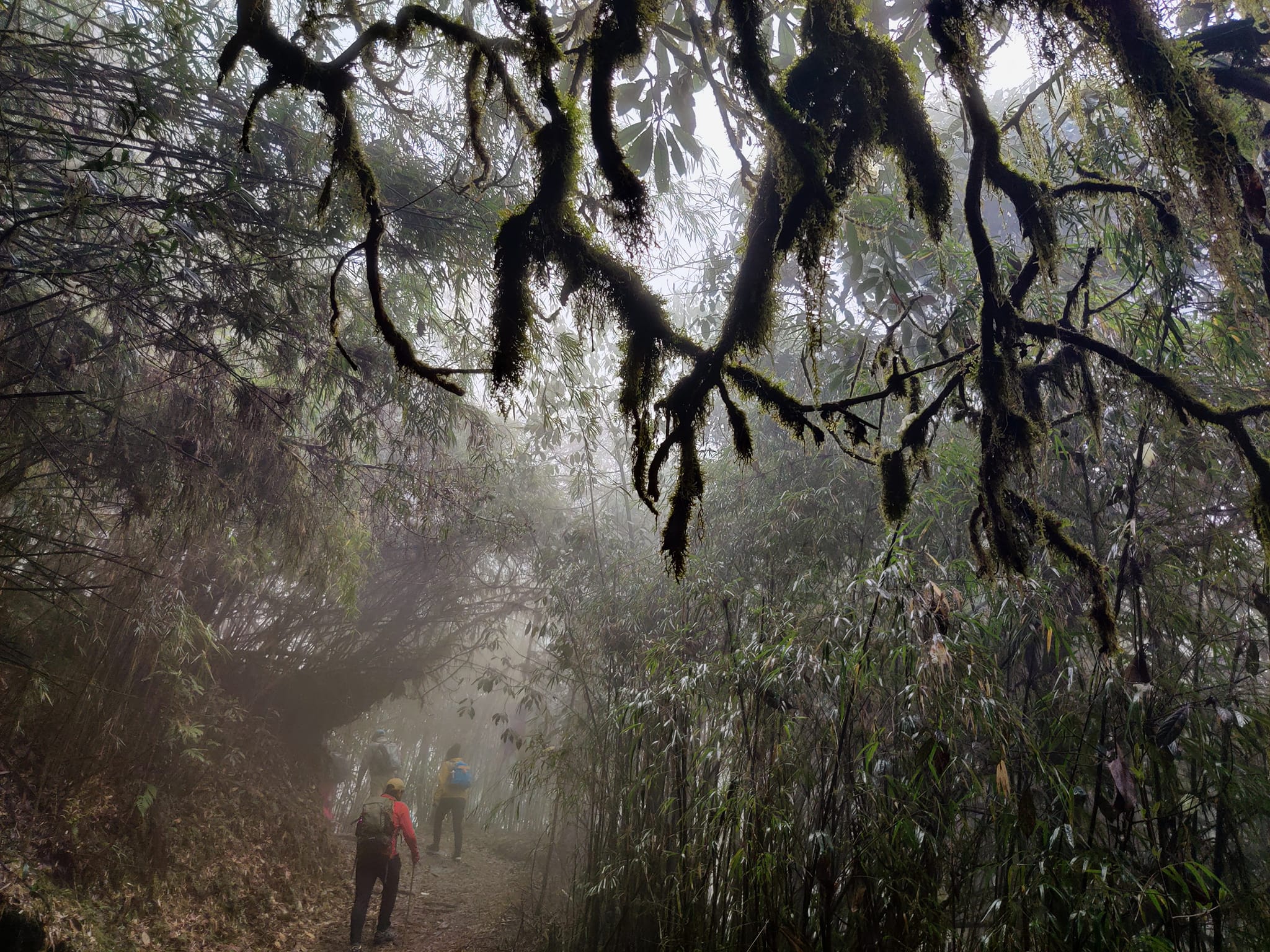
Established in 1996 in response to substantial anthropogenic pressure, Barsey Rhododendron Sanctuary (Barsey) in Sikkim, India, serves as a model for biodiversity conservation. Spanning 104 km² in area and elevations ranging from 2,200 to 4,100 m asl, Barsey protects a high diversity of Rhododendron, oaks and bamboos, as well as critical habitats for endangered fauna. Following the exclusion of grazing and the implementation of active community engagement through Eco-Development Committees, the sanctuary has demonstrated forest regeneration, increased carbon stocks, restored springs and a rise in ecotourism during Rhododendron flowering seasons. Here, we review the historical transformation of Barsey from a highly disturbed forest landscape to a recovering protected area, highlighting ecological outcomes, biodiversity gains and the role of local communities in conservation. We outline future research and conservation priorities, and ways to regulate tourism pressure, support off-season livelihoods and habitat restoration, and promote sustainable Rhododendron cultivation. Furthermore, we highlight the need to strengthen long-term ecological research and climate monitoring through community-led conservation initiatives.
References
BANERJEE, A., CHAKRABORTY, P. & BANDOPADHYAY, R. (2019). Urgent conservation needs in the Sikkim Himalaya biodiversity hotspot. Biodiversity, 20: 88–97. https://doi.org/10.1080/14888386.2019.1656547
BASNETT, S. & GANESAN, R.A. (2022). Comprehensive review on the taxonomy, ecology, reproductive biology, economic importance and conservation status of Indian Himalayan rhododendrons. The Botanical Review, 88: 505–544. https://doi.org/10.1007/s12229-021-09273-z
BASNETT, S., KRPAN, J. & ESPINDOLA, A. (2025). Floral traits and their connection with pollinators and climate. Annals of Botany, 135: 125–140. https://doi.org/10.1093/aob/mcae046
BHAGWAT, S., DIWAN, M. & VENKATARAMANI, V. (2012). Analysis of grazing exclusion policy through a climate change mitigation lens-case from Barsey Rhododendron Sanctuary, West Sikkim. In: ARRAWATIA, M.L. & TAMBE, S. (EDS), Climate Change in Sikkim: Patterns, Impacts and Initiatives. Information and Public Relations Department, Government of Sikkim, Gangtok, pp. 351–368.
BHUTIA, Y., GUDASALAMANI, R., GANESAN, R. & SAHA, S. (2019). Assessing forest structure and composition along the altitudinal gradient in the state of Sikkim, Eastern Himalayas, India. Forests, 10: 633. https://doi.org/10.3390/f10080633
CHAMPION, H.G. & SETH, S.K. (1968). A Revised Survey of the Forest Types of India. The Manager of Publications, Delhi.
CHETTRI, B., SHARMA, E., DEB, D.C. & SUNDRIYAL, R.C. (2018). Birds of the Kangchenjunga landscape, the eastern Himalaya: status, threats and implications for conservation. Avian Research, 9: 9. https://doi.org/10.1186/s40657-018-0100-2
CONVENTION ON BIOLOGICAL DIVERSITY (CBD) (2022). Kunming–Montreal Global Biodiversity Framework. Montreal, Canada: Secretariat of the Convention on Biological Diversity. Available online: www.cbd.int/gbf (accessed February 2026).
DAS, K. (2010). Diversity and conservation of wild mushrooms in Sikkim with special reference to Barsey Rhododendron Sanctuary. NeBIO, 1: 1–13. Available online: dspace.cus.ac.in/jspui/bitstream/1/929/1/MUSHROOMS%20OF%20SIKKIM.pdf (accessed February 2026).
DIALOGUE EARTH (2021). Climate change exacerbates human–wildlife conflict in Sikkim. Dialogue Earth. Available online: dialogue.earth/en/nature/human-wildlife-sikkim (accessed February 2026).
GOGOI, R., SHERPA, N., BENJAMIN, J.H.F., AGRAWALA, D.K., RAI, S.K. & DASH, S.S. (2021). Flora of Sikkim: A Pictorial Guide. Forest & Environment Department, Government of Sikkim and Botanical Survey of India, Gangtok.
GOGOI, R., SHERPA, N., MAO, A.A., RAI, S. & GUPTA, S. (2022). Rhododendrons of Sikkim & Darjeeling Himalaya: An Illustrated Account. Botanical Survey of India, Ministry of Environment, Forest & Climate Change, Government of India. Available online: bsi.gov.in/uploads/documents/whatsnew/english/Rhododendrons_of_Sikkim_Darjeeling_Himalaya_(2023).pdf (accessed February 2026).
GOVERNMENT OF SIKKIM (2018–2028). Management plan of Barsey Rhododendron Sanctuary. Forest & Environment Department, Government of Sikkim, Gangtok.
HOOKER, J.D. (1849). The Rhododendrons of Sikkim-Himalaya. Part I. Reeve, Benham, and Reeve, London.
HOOKER, J.D. (1851). The Rhododendrons of Sikkim-Himalaya. Part II. Reeve, Benham, and Reeve, London.
HOOKER, J.D. (1855). Illustrations of Himalayan Plants. L. Reeve, London.
HOOKER, J.D. (1891). Himalayan Journals: or, Notes of a Naturalist in Bengal, the Sikkim and Nepal Himalayas, the Khasia Mountains, &c. Vol. 32. Ward Lock, Bowden.
JANSEN, S.A., KLEEREKOOPER, I., HOFMAN, Z.L.M., KAPPEN, I.F.P.M., STARY-WEINZINGER, A. & VAN DER HEYDEN, M.A.G. (2012). Grayanotoxin poisoning: ‘Mad honey disease’ and beyond. Cardiovascular Toxicology, 12: 208–215. doi.org/10.1007/s12012-012-9162-2
KEY BIODIVERSITY AREAS (2024). Barsey Rhododendron Sanctuary. Available online: www.keybiodiversityareas.org/site/factsheet/18369 (accessed February 2026).
KUSHWAHA, S.P.S., PADMANABAN, P., KUMAR, D. & ROY, P.S. (2005). Geospatial modeling of plant richness in Barsey Rhododendron Sanctuary in Sikkim Himalayas. Geocarto International, 20: 63–68. https://doi.org/10.1080/10106040508542347
LACHUNGPA, U.G., RAHMANI, A.R. & ISLAM, M.Z.U. (2011). Eleven priority areas for conservation: important bird areas of Sikkim. In: ARRAWATIA, M.L. & TAMBE, S. (EDS), Biodiversity of Sikkim: Exploring and Conserving a Global Hotspot. Government of Sikkim, Gangtok, pp. 281–300.
MAITY, D., TAHA, S.O., TAMBE, S. & MAITI, G.G. (2006). Barsey Rhododendron Sanctuary, Sikkim: a remote sensing approach. Indian Forester, 132: 971–979. https://doi.org/10.36808/if/2006/v132i8/4235
MANISH, K., PANDIT, M.K. & SEN, S. (2022). Inferring the factors for origin and diversification of endemic Himalayan flora using phylogenetic models. Modeling Earth Systems and Environment, 8: 2591–2598. doi.org/10.1007/s40808-021-01251-z
MAO, A.A., DASH, S.S. & SINGH, P. (2017). Rhododendrons of North East India. A Pictorial Handbook. Botanical Survey of India, Kolkata.
ONDO, I., DHANJAL‐ADAMS, K.L., PIRONON, S., SILVESTRO, D., COLLI‐SILVA, M., DEKLERCK, V., GRACE, O.M., MONRO, A.K., NICOLSON, N., WALKER, B. & ANTONELLI, A. (2024). Plant diversity darkspots for global collection priorities. New Phytologist, 244: 719–733. https://doi.org/10.1111/nph.20024
PANDIT, M.K., KUMAR, M., SEN, S., BAWA, K.S., KNOLL, A.H., WEBB, A.A.G., CLIFT, P.D., CONDAMINE, F.L. & HOORN, C. (2025). Evolutionary triggers of plant speciation in the Himalaya–Tibet–Hengduan biodiversity epicentre. Journal of Biogeography, e15152. https://doi.org/10.1111/jbi.15152
PRADHAN, U.C. (1985). A preliminary enumeration of rhododendrons of the Indian region. Part I. Himalayan Plant Journal, 3: 110–123.
PRADHAN, U.C. (1986). A preliminary enumeration of rhododendrons of the Indian region. Part II. Himalayan Plant Journal, 4: 73–76.
PRADHAN, U.C. & LACHUNGPA, S.T. (1990). Sikkim Himalayan Rhododendrons. Primulaceae Books, Kalimpong.
RAI, R. (2008). Impact of Barsey Rhododendron Sanctuary in surrounding communities. A case study of the Singling GPU, West Sikkim, India. Unpublished Master’s thesis, Tribhuvan University. Available online: https://hdl.handle.net/20.500.14540/6998 (accessed February 2026).
RAWAT, G.S. & TAMBE, S. (2012). Sikkim Himalaya: Unique features of biogeography and ecology. In: ARRAWATIA, M.L. & TAMBE, S. (EDS), Climate Change in Sikkim: Patterns, Impacts and Initiatives. Information and Public Relations Department, Government of Sikkim, Gangtok, pp. 5–12. Available online: www.sikkimforest.gov.in/Reports%20and%20Publications/Biodiveristy-of-Sikkim/1%20Biodiversity_1-12%20web.pdf (accessed February 2026).
SHARMA, A., GUPTA, S., JOSHI, H.G. & GUPTA, M. (2025). Forest stand structure and regeneration status on trekking route of Barsey Rhododendron Sanctuary, Sikkim Himalaya, India. Tropical Ecology, 67: 25–33. https://doi.org/10.1007/s42965-025-00400-0
SHARMA, T.R. (2001). Eco-Development of Barsey Rhododendron Sanctuary. Department of Forests, Environment and Wildlife, Government of Sikkim, Gangtok.
SIKENVIS (2021). Climate change initiatives in Sikkim. ENVIS Hub, Gangtok. Available online: www.sikkimforest.gov.in/Biodiversity.htm (accessed January 2025).
SINGH, P. & SANJAPPA, M. (2011). Flowering plants of Sikkim – An analysis. In: ARRAWATIA, M.L. & TAMBE, S. (EDS), Biodiversity of Sikkim: Exploring and Conserving a Global Hotspot. Government of Sikkim, Gangtok, pp. 65–89.
SINGH, R., SHARMA, R.K., BHUTIA, T.U., BHUTIA, K. & BABU, S. (2021). Conservation policies, eco-tourism, and end of pastoralism in Indian Himalaya? Frontiers in Sustainable Food Systems, 5: 613998. https://doi.org/10.3389/fsufs.2021.613998
SUBBA, S. (2019). Inventory of bird species along the trekking route of Barsey Rhododendron Sanctuary in West Sikkim, India. International Journal of Zoology Studies, 4: 27–31. Available online: www.zoologyjournals.com/assets/archives/2019/vol4issue1/4-2-25-377.pdf (accessed February 2026).
SUBBA, S., CHAMLING, N., PRADHAN, A. & NEPAL, S. (2018). Quantitative analysis of vegetation in different forest types of Barsey Rhododendron Sanctuary in West Sikkim, India. Proceedings of International Biodiversity Congress, Forest Research Institute, Dehradun, India, 4–6 October 2018, pp. 1–7.
SUKUMARAN, S. & BASNETT, S. (2023). Ecosystem services provision by Rhododendron forests in the Sikkim Himalaya. Journal of the American Rhododendron Society, spring issue: 68–74.
TAMBE, S., ARRAWATIA, M. & SHARMA, N. (2011). Assessing the priorities for sustainable forest management in the Sikkim Himalaya, India: a remote sensing based approach. Journal of the Indian Society of Remote Sensing, 39: 555–564. https://doi.org/10.1007/s12524-011-0110-6
TAMBE, S., BHUTIA, N. & ARRAWATIA, M. (2005). People’s opinion on the impacts of ‘ban on grazing’ in Barsey Rhododendron Sanctuary, Sikkim, India. The Mountain Institute, Gangtok. Available online: www.sikkimforest.gov.in/docs/wildlife/wwfbarsey.pdf (accessed February 2026).
WORLD WILDLIFE FUND (WWF-INDIA) AND FOREST AND ENVIRONMENT DEPARTMENT (F&ED)-SIKKIM (2016–2017). WWF-India internal camera trap report.
Downloads
Published
Issue
Section
License
Copyright (c) 2026 Dr. Shweta B., Dr. Priya G., Dr. Yangchenla. B, Dr. Sandeep S.

This work is licensed under a Creative Commons Attribution 4.0 International License.
Please read our Open Access, Copyright and Permissions policies for more information.